Rustic No-Knead Rosemary Garlic Bread
WHY THIS BREAD BELONGS IN YOUR KITCHEN
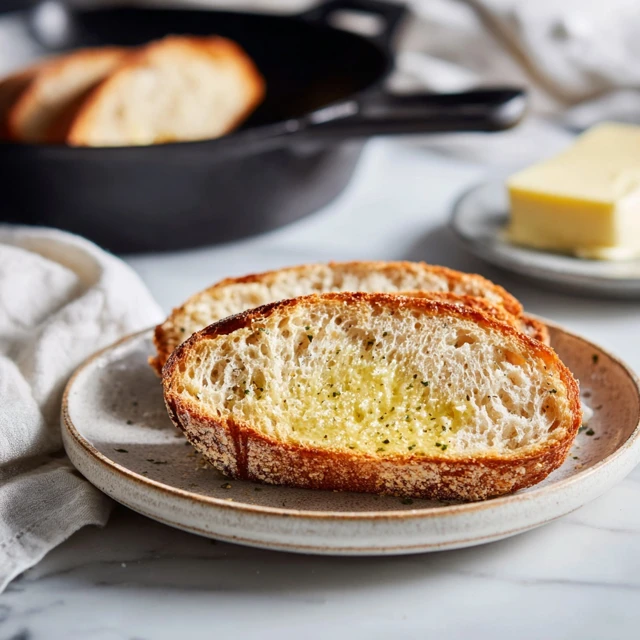
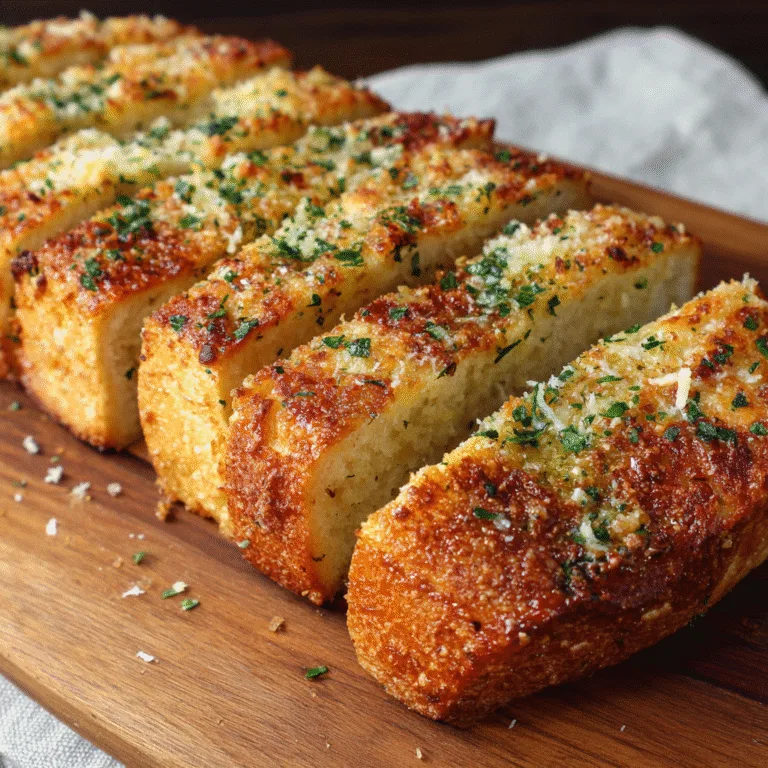
There is something almost sacred about the smell of freshly baked bread drifting through a kitchen—warm, comforting, and full of promise. But when that bread is infused with earthy rosemary, golden roasted garlic, and a crust worthy of any artisan bakery, the experience becomes extraordinary. Rustic No-Knead Rosemary Garlic Bread is the kind of recipe that transforms ordinary afternoons into something memorable. It requires minimal effort but delivers maximum sensory reward: a golden, crackling crust; a pillowy, aromatic interior; and a taste that balances herbaceous brightness with deep garlic warmth.
One of the reasons this bread has become globally beloved is its accessibility. Traditional bread-making often intimidates newcomers with kneading, proofing, shaping, and temperature precision. But this recipe removes nearly all of that complexity. No kneading means no intimidation. The dough does the work for you—slowly hydrating, fermenting, and developing gluten structure over time. With only a few minutes of active preparation, you can produce a loaf that rivals anything found in a professional bakery.
But this isn’t just a beginner’s bread. Even artisan bakers cherish the no-knead method because of its purity: flour, water, yeast, salt, time, and in this version, generous aromatics. The dough forms a natural open crumb, the Dutch oven traps steam for perfect lift and crackle, and long fermentation infuses the bread with nuanced flavor.
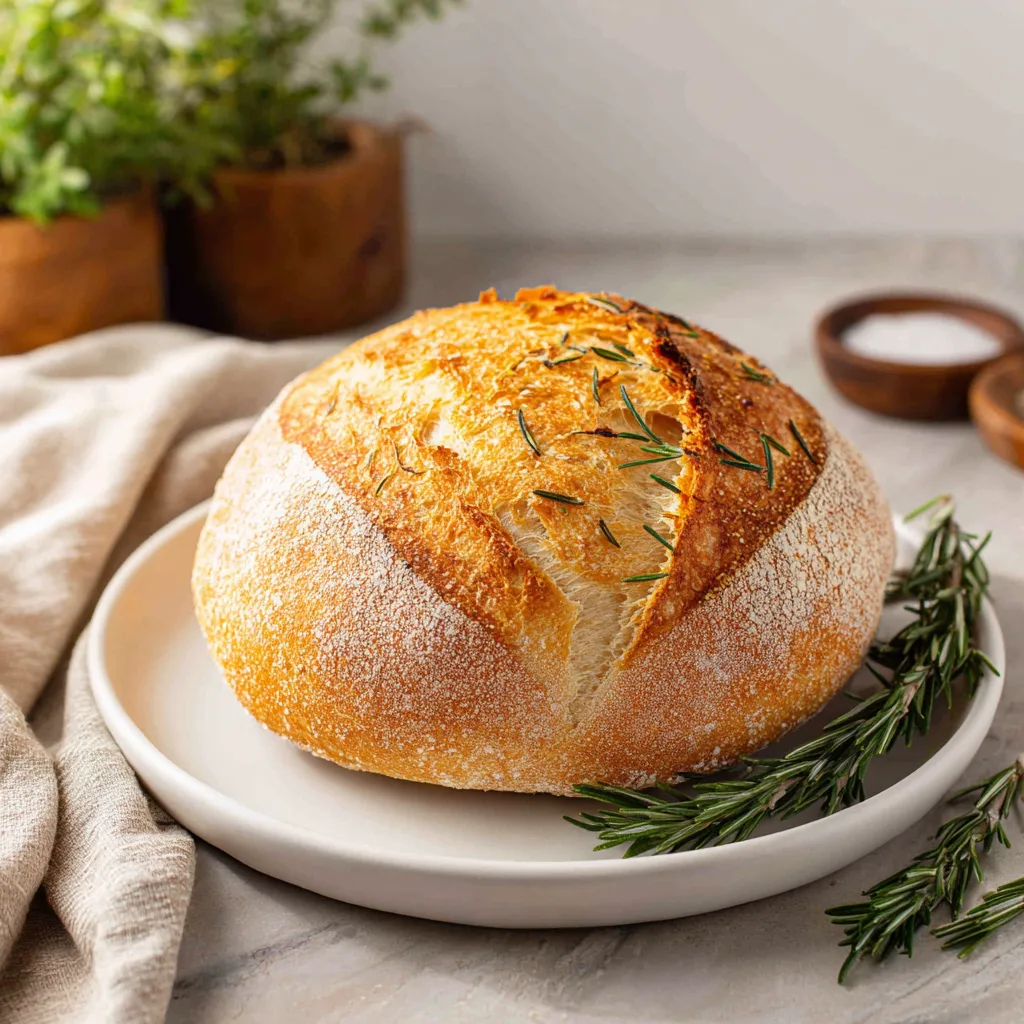
This article takes you far beyond a recipe. It provides a culinary experience, exploring:
- the science behind no-knead dough
- the role of hydration and fermentation
- how rosemary and garlic transform flavor
- the best way to roast garlic for maximum flavor
- shaping, scoring, and baking techniques
- how to store and revive leftover bread
- pairing suggestions, serving ideas, and variations
And of course, you’ll receive:
- a detailed ingredients list
- numbered instructions
- creative sections
- AI image prompts
- a complete JSON recipe card
- Pinterest template
- Canva title
Let’s begin your artisan bread journey.
THE STORY BEHIND NO-KNEAD ARTISAN BREAD
The no-knead technique entered mainstream kitchens in the early 2000s after a New York baker demonstrated how time—rather than physical kneading—could build gluten structure. This revelation shifted home bread-baking culture, proving high-quality results didn’t require advanced techniques.
Why does no-knead work so well?
Because gluten develops naturally when flour hydrates. Over several hours, water activates proteins, forming elastic chains essential for bread structure. A slow fermentation also creates flavor complexity similar to sourdough, even without a starter.
The result is:
- better texture
- deeper flavor
- easier process
- higher success rate
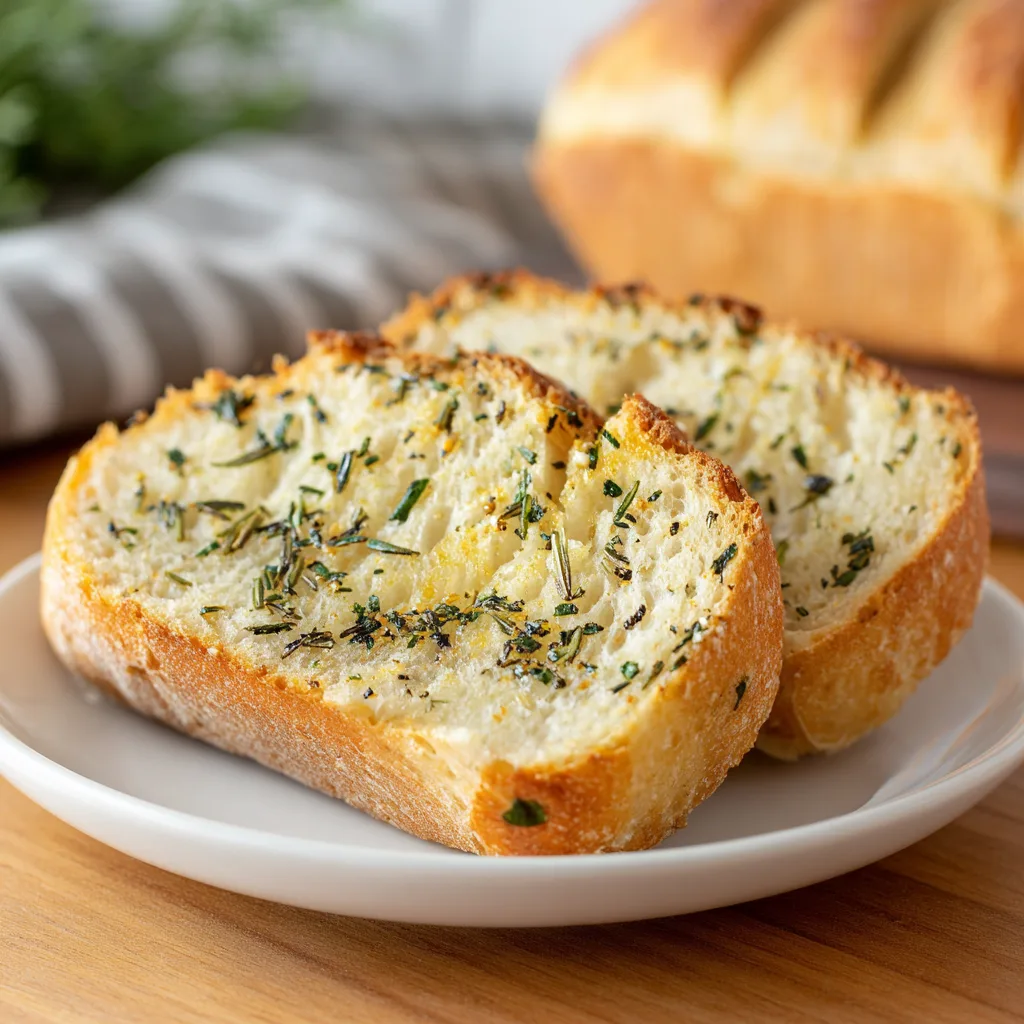
Adding rosemary and garlic transforms this loaf into something poetic: familiar yet elevated, rustic yet elegant. Rosemary’s piney aroma awakens the senses, while roasted garlic—soft, buttery, and caramelized—adds subtle sweetness and umami depth.
THE FLAVOR COMPONENTS: ROSEMARY + GARLIC
Rosemary: The Herbal Hero
Rosemary is potent, aromatic, and pine-like. Fresh rosemary works best because its essential oils release gently during fermentation and baking.
Garlic: Caramelized Perfection
Raw garlic can overpower dough, but roasted garlic becomes soft, sweet, and spreadable like butter. When folded into the dough, it melts into pockets of flavor.
INGREDIENTS
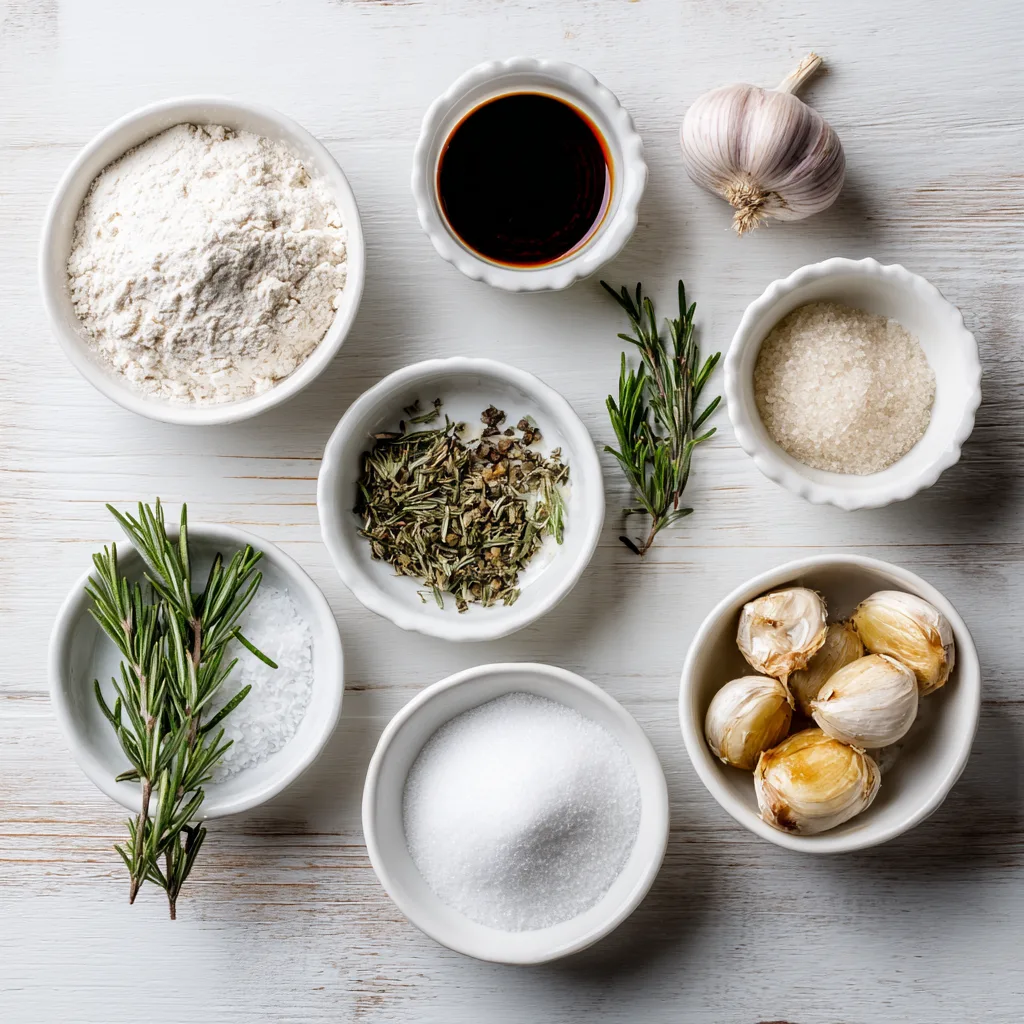
— Flour (bread flour preferred for structure)
— Warm water
— Instant yeast
— Salt
— Fresh rosemary, finely chopped
— Whole garlic head for roasting
— Olive oil (for garlic roasting)
INSTRUCTIONS
- Roast the garlic: Slice the top off a garlic bulb, drizzle with olive oil, wrap in foil, and roast at 400°F (204°C) for 40 minutes until golden and soft. Cool completely.
- Mix the dough: In a large bowl, combine flour, salt, and rosemary.
- Add warm water and yeast, stirring until a shaggy dough forms.
- Squeeze roasted garlic cloves from their skins and fold gently into the dough.
- Cover the bowl with plastic wrap and let the dough rise for 12–18 hours at room temperature.
- Once doubled and bubbly, turn dough onto a floured surface and gently shape into a round ball.
- Let rest for 30 minutes while preheating the oven with a Dutch oven inside at 450°F (232°C).
- Carefully transfer the dough into the hot Dutch oven using parchment paper.
- Cover and bake for 30 minutes.
- Remove lid and bake an additional 15–20 minutes until deep golden brown.
- Cool for at least 1 hour before slicing.

Rustic No-Knead Rosemary Garlic Bread
Ingredients
Equipment
Method
- Roast garlic by slicing off top, drizzling with oil, wrapping in foil, and baking 40 minutes at 400°F.
- Mix flour, salt, yeast, and rosemary in a large bowl.
- Add warm water and stir until a shaggy dough forms.
- Squeeze roasted garlic into dough and gently fold in.
- Cover and let rise 12–18 hours at room temperature.
- Shape dough into a ball and rest for 30 minutes.
- Preheat Dutch oven to 450°F.
- Place dough on parchment and lower into Dutch oven.
- Bake covered 30 minutes, then uncovered 15–20 minutes.
- Cool completely before slicing.