CREAMY HOMEMADE CAESAR DRESSING – RESTAURANT-STYLE
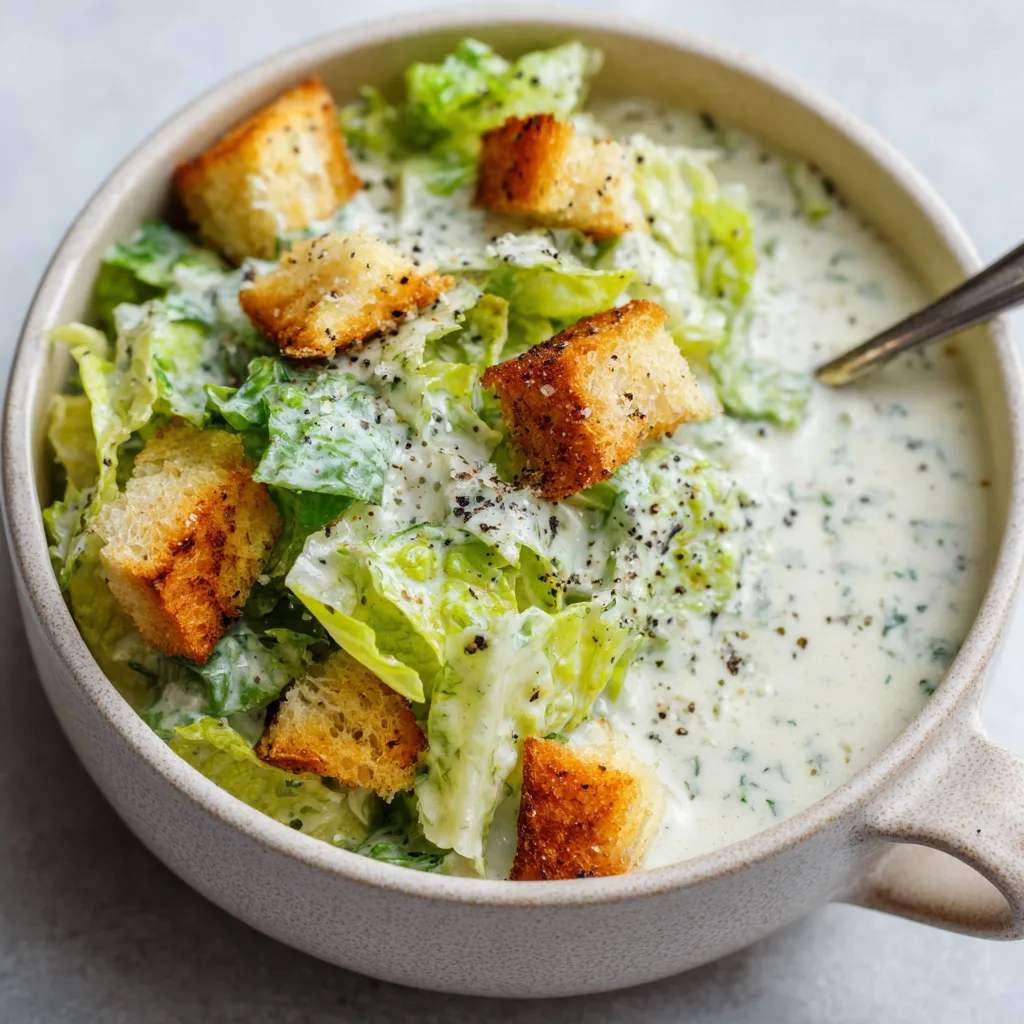
Smooth, rich, garlicky, salty, tangy, and utterly addictive — Creamy Homemade Caesar Dressing is one of those iconic sauces that makes you realize how truly life-changing from-scratch cooking can be. Whether you drizzle it over crisp romaine, toss it with warm grilled chicken, spoon it onto sandwiches, or use it as a dip for roasted vegetables, this classic restaurant-style Caesar delivers a depth of flavor bottled versions can’t even begin to match.
In this long-form recipe article, we will dive deep — very deep — into the craft of creating the best Caesar dressing you have ever tasted. We will explore every ingredient, substitution, texture nuance, whisking method, emulsification science, anchovy fear-busting, and chef-level trick that transforms a simple dressing into an unforgettable staple. The guiding goal is simple: by the end of this article, you’ll be able to make Caesar dressing not only confidently but masterfully.
INTRODUCTION: WHY HOMEMADE CAESAR DRESSING IS SUPERIOR
Store-bought Caesar dressing often attempts to mimic richness through stabilizers, gums, and artificial flavor boosters. But they always lack what real Caesar demands:
Pure umami from anchovies.
Bright acidity from fresh lemon.
Heat from fresh garlic.
Creaminess from real egg yolk or mayonnaise.
Complexity from Parmesan.
Balance from Dijon mustard.
Smooth body from a proper emulsion.
In a bottle?
You get flat flavor, dull acidity, and overwhelming heaviness.
Homemade?
You get a living sauce — bold, bright, luxurious, and layered — built from ingredients that bloom together into something greater than the sum of its parts.
A BRIEF HISTORY OF CAESAR DRESSING
Despite what many assume, Caesar dressing isn’t Italian. It was created in 1924 by Caesar Cardini, an Italian-Mexican chef working in Tijuana. On a busy night with depleted ingredients, he tossed together a simple salad: lettuce, olive oil, lemon, egg, Parmesan, and Worcestershire.
Over time, anchovies and garlic were added, emulsification refined, and the modern creamy Caesar was born.
Today, restaurants treat it as both art and signature — each chef having their own twist. This recipe embraces the classic foundations while delivering the stable, silky texture modern eaters expect.
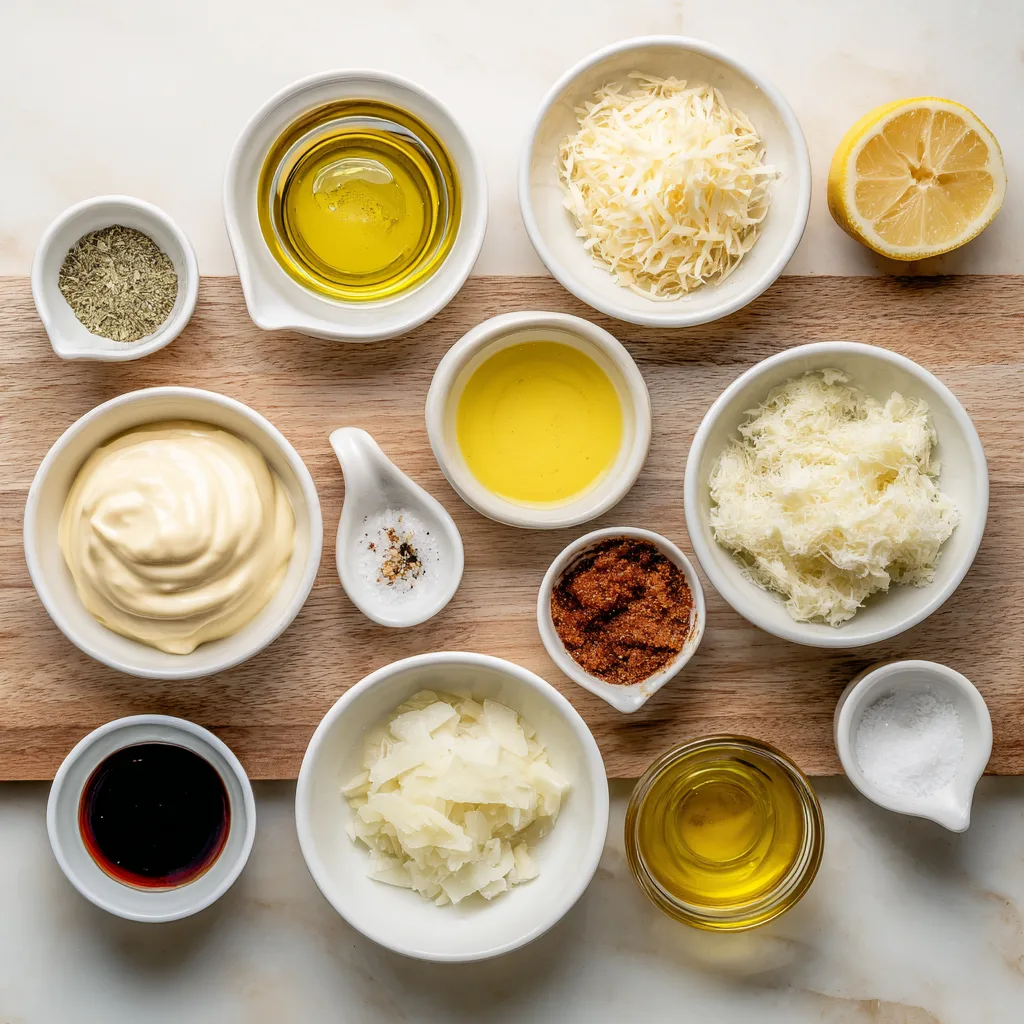
INGREDIENTS: THE ROLE EACH ONE PLAYS
1. Anchovies — The Soul of Caesar
Many people fear anchovies. Don’t. They disappear completely into the dressing, leaving no fishiness. Instead, they add:
- deep salty umami
- savory richness
- restaurant-quality flavor
If you omit anchovies, your dressing becomes ranch with garlic, not Caesar.
Alternatives:
- anchovy paste
- 1 tsp Worcestershire (contains anchovy)
- roasted garlic + soy sauce (not authentic but umami-boosting)
2. Garlic — Raw and Potent
Raw garlic gives Caesar dressing its bold, unmistakable bite. One clove is mild; more creates intensity.
Chef tip: mince and press into a paste with salt.
Salt softens garlic and releases oils for smoother flavor.
3. Lemon Juice — Fresh, Bright Acidity
Bottle lemon juice tastes flat and metallic. Fresh lemon delivers:
- clean acidity
- citrus fragrance
- proper balance
4. Dijon Mustard — The Quiet Emulsifier
Dijon not only adds tang but also helps the dressing bind into a creamy emulsion.
5. Egg Yolk or Mayonnaise — The Cream Base
Classic Caesar uses raw egg yolk. But many modern restaurant versions use mayonnaise for:
- stability
- thickness
- longer fridge life
- safety
You can choose either.
Egg yolk = silkier, lighter.
Mayonnaise = thicker, guaranteed creamy.
6. Parmesan — Salty, Nutty, Umami Bomb
Always grate it fresh. Pre-shredded cheese has anti-caking agents and lacks the creamy melt-in texture Caesar dressing needs.
7. Olive Oil — The Emulsifier Backbone
Use a light olive oil — extra virgin can be overly bitter when blended aggressively.
8. Worcestershire — The Hidden Flavor Layer
Adds depth, anchovy-umami, and gentle sweetness.
9. Black Pepper — The Caesar Signature Taste
Caesar dressing uses LOTS of cracked black pepper. It defines the entire aroma.
THE SCIENCE OF EMULSIFICATION (WHY CAESAR DRESSING WORKS)
Caesar dressing is an emulsion — a mixture of oil and water-based ingredients. When whisked or blended slowly, tiny droplets of oil suspend within the acidic base (lemon + Dijon + yolk), creating:
- smooth texture
- creamy mouthfeel
- unified flavor
If you dump oil in quickly, it separates.
If you whisk slowly, it thickens beautifully.
This is the difference between watery homemade Caesar and restaurant-style Caesar.
Two ways to emulsify:
1. By hand (classic) — slower but velvety.
2. Blender/food processor — quick and thicker.
Both methods will appear later in the recipe.
STEP-BY-STEP FLAVOR TECHNIQUE (DETAILED)
Making Caesar dressing is about balance. Each taste must support the next:
1. Start with a garlic-anchovy paste
Mash garlic and anchovies together with salt until smooth.
2. Add the emulsifiers
Mix in Dijon, Worcestershire, lemon, and egg yolk (or mayo).
3. Whisk in oil slowly
This creates the creamy restaurant texture.
4. Add Parmesan
It thickens the dressing naturally and adds flavor.
5. Adjust
Taste and fine-tune with more lemon, salt, or pepper.
TEXTURE ADJUSTMENTS (FOR PERFECT CONSISTENCY)
For thicker dressing:
- Add more Parmesan
- Add more mayo
- Increase oil slightly
- Chill 20 minutes
For thinner dressing:
- Add warm water 1 tsp at a time
- Add more lemon juice
- Reduce Parmesan
For smoother dressing:
- Use a blender
- Sieve the garlic-anchovy paste before mixing
VARIATIONS: MAKE IT YOUR OWN
1. Ultra-Creamy Steakhouse Caesar
Increase mayo and Parmesan + use less lemon.
2. “Sharp” Italian-Style Caesar
Extra lemon + extra anchovy + less mayo.
3. No-Raw-Egg Caesar
Use all mayo — most restaurants do this now.
4. Greek Yogurt Caesar (Lighter Version)
Swap half mayo for yogurt.
5. Spicy Caesar
Add Calabrian chili paste or hot sauce.
6. Roasted Garlic Caesar (Mild)
Replace raw garlic with roasted garlic for sweet warmth.
BEST WAYS TO USE HOMEMADE CAESAR DRESSING
This dressing isn’t only for romaine salad. Try it with:
1. Grilled Chicken Caesar Wraps
Toss warm chicken strips with dressing + Parmesan.
2. Roasted Vegetable Dip
Serve with roasted potatoes, carrots, or Brussels sprouts.
3. Caesar Pasta Salad
Mix with rotini, chicken, and romaine.
4. Sandwich Spread
Use instead of mayo on turkey or chicken sandwiches.
5. Caesar Pizza Base
Spread on dough before topping with grilled chicken and Parmesan.
6. Burger Sauce
Blend Caesar dressing with a little extra pepper → amazing burger sauce.
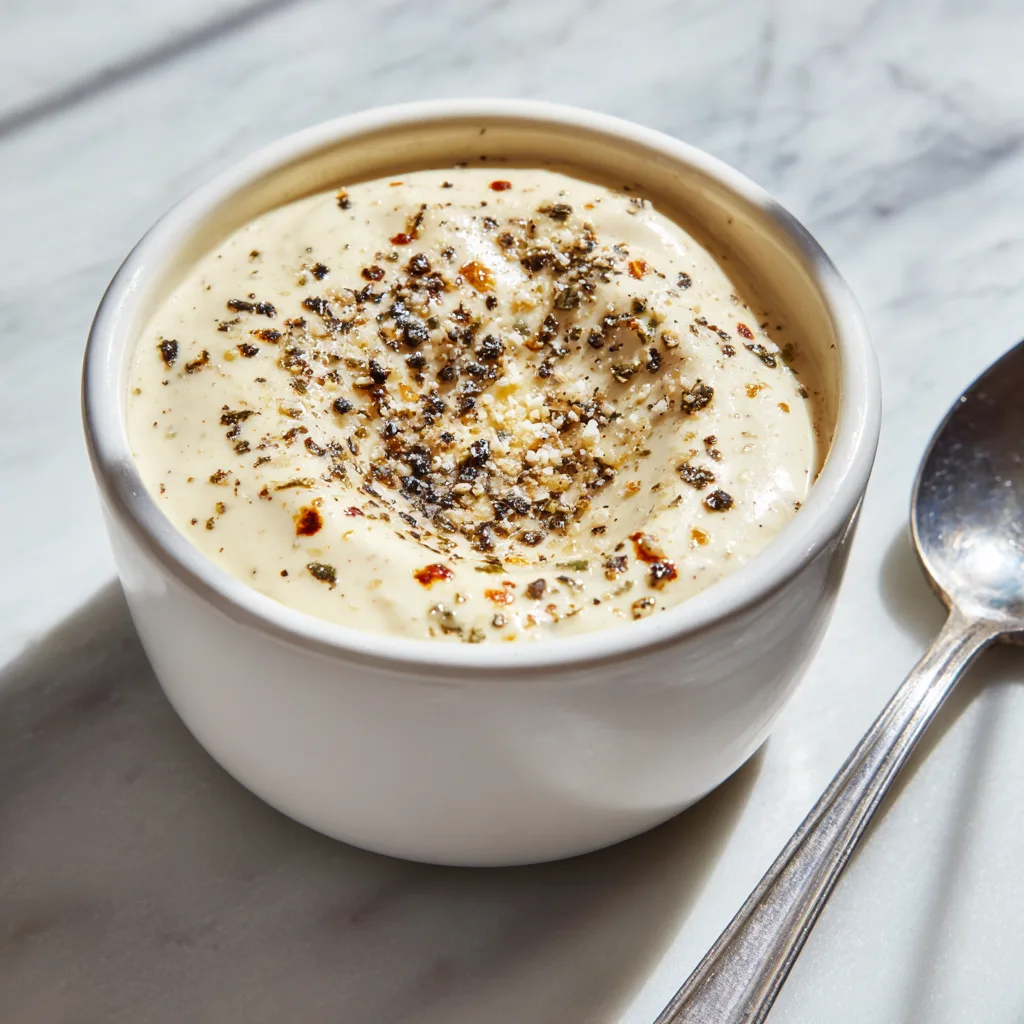
Creamy Homemade Caesar Dressing – Restaurant-Style
Ingredients
Equipment
Method
- In a mixing bowl, whisk together mayonnaise, Parmesan, lemon juice, Dijon mustard, and Worcestershire sauce until smooth.
- Add minced garlic and anchovy paste, whisking thoroughly to incorporate.
- Season with salt and freshly ground black pepper.
- If desired, whisk in olive oil for an extra silky finish.
- Taste and adjust seasoning as needed. Chill for 20 minutes before serving for best flavor.
Notes
STORAGE & FOOD SAFETY
With egg yolk:
- Refrigerate 24–48 hours
- Keep cold
- Do NOT leave out
With mayonnaise:
- Refrigerate up to 5–6 days
- Store in airtight container
- Stir before serving
Freezing is not recommended
Oil-based emulsions break when thawed.
COMMON MISTAKES & HOW TO FIX THEM
Dressing too salty
Add more lemon + extra mayo.
Too garlicky
Add more oil + mayo to dilute.
Too thick
Whisk in warm water or lemon juice.
Separated/oily
Blend on high for 10 seconds to re-emulsify.
No flavor
You likely skipped anchovies — add ½ tsp Worcestershire or 1 anchovy.
THE RESTAURANT SECRET: LET IT REST
Let Caesar dressing chill for at least 20–30 minutes before serving.
The garlic softens, anchovies melt into the base, and flavors marry beautifully.
This transforms the dressing from “pretty good” to restaurant-quality.
INGREDIENTS
Base
- 1 large egg yolk (or ½ cup mayonnaise for no-egg version)
- 2–3 anchovy fillets (or 1 tsp anchovy paste)
- 2 garlic cloves
- 2 tsp Dijon mustard
- 1.5 tbsp Worcestershire sauce
- Juice of 1 lemon (2–3 tbsp)
- ½–¾ cup light olive oil
- ½ cup freshly grated Parmesan
- ½ tsp salt
- 1–2 tsp cracked black pepper
METHOD
1. Prepare the garlic-anchovy base
Mash garlic + anchovy + pinch of salt into a smooth paste.
This ensures NO fishy chunks and pure flavor.
2. Whisk wet ingredients
Add lemon, Worcestershire, Dijon, and egg yolk.
Whisk aggressively for 30 seconds.
3. Create the emulsion
Slowly drizzle oil while whisking continuously.
Mixture thickens into creamy sauce.
4. Add Parmesan
Stir until smooth — dressing becomes thicker.
5. Season
Add pepper and adjust lemon or salt.
6. Rest 20 minutes
Critical for balanced flavor.
THE SIGNATURE RESTAURANT EXPERIENCE
A true Caesar dressing should taste like:
- creamy luxury
- garlic heat
- bright acidity
- deep umami
- salty Parmesan notes
- smooth emulsified body
- pepper bite
When you taste it, you should think:
“This tastes like a high-end steakhouse.”
That’s exactly what this recipe creates.
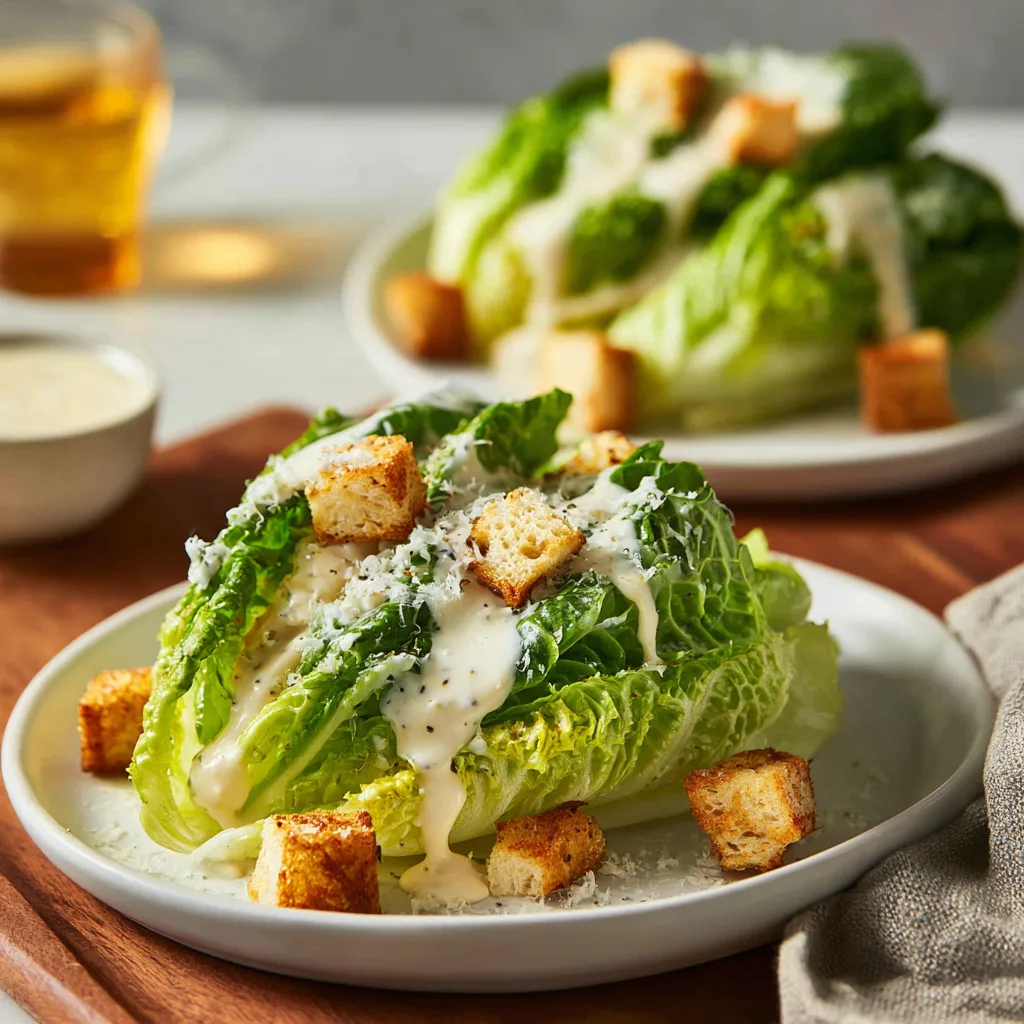
SERVING SUGGESTION: CLASSIC CAESAR SALAD
Toss romaine hearts + dressing + shaved Parmesan + homemade croutons.
Top with grilled chicken, salmon, shrimp, or steak for a full meal.
CONCLUSION: WHY THIS RECIPE WORKS
This homemade Caesar dressing is:
- bold
- creamy
- balanced
- highly versatile
- restaurant-quality
- easy to make
- deep in flavor
It offers everything bottled dressing lacks, delivering true flavor complexity that elevates any salad, wrap, or entrée.
Once you make it from scratch, you’ll realize why restaurants guard their Caesar recipes so closely. It’s a simple sauce, but when done right, it becomes unforgettable.